Field Trips
Tuesday Field Trips
Organized by the Sacramento-Shasta Chapter of TWS
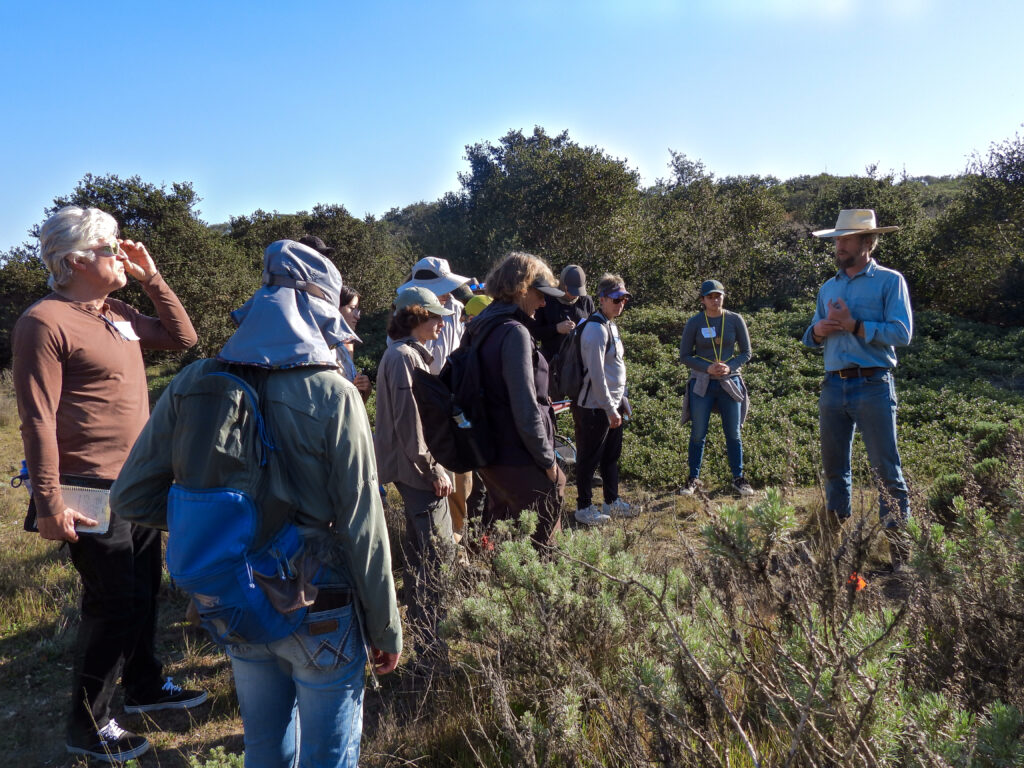
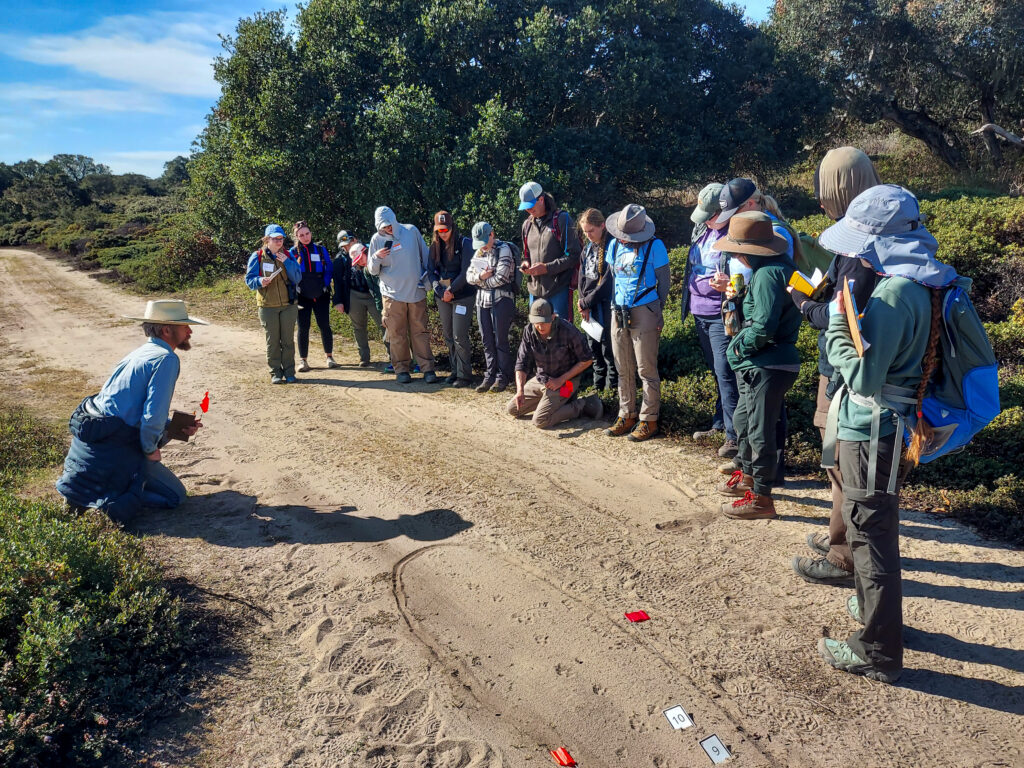
We hope you can arrive a little early for the conference, and stay a little late to explore the best of the Sacramento area. The Sacramento-Shasta Chapter of TWS has organized some great field trips that highlight the local area!
- All field trips will be held – Tuesday, February 2
- Field Trips – $20 Registration Fee Each
- We will share participant lists as the date approaches for carpooling
- Limited spots available so register early!
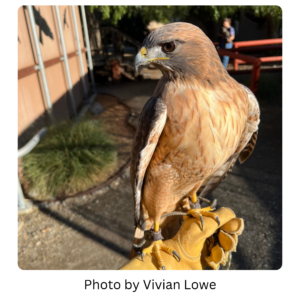 |
California Raptor Center Tour 9-11am |
Join us to learn about the California Raptor Center, an educational and research facility which takes in 100-200 sick, injured, and orphaned raptors each year and successfully releases about 60% back to the wild. As part of the trip, participants will meet non-releasable raptors and then tour the facility. Time at the Center will be approximately 1.5-2 hours. Allow 30 minutes to drive from the conference venue. |
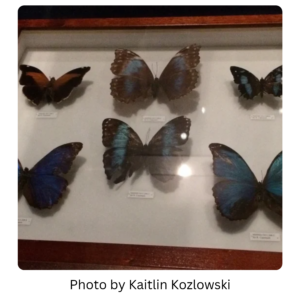 |
Bohart Museum of Entomology Tour 11:15am-12:15pm |
The Bohart Museum is home to the seventh largest insect collection in North America which includes over 7 million specimens of terrestrial and freshwater arthropods from around the world. The Museum is also home to California Insect Survey, a storehouse of the insect biodiversity of California’s deserts, mountains, coast, and the Great Central Valley. Participants will view pinned insects and handle live ones with a docent from the museum for approximately 1 hour. Bring money for parking and allow 30 minutes to drive from the conference venue. |
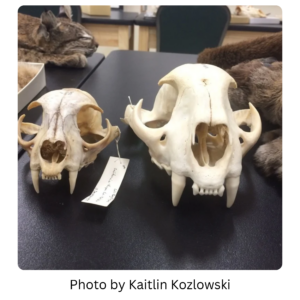 |
UCD Museum of Fish and Wildlife Biology 1-3pm |
The Museum of Fish and Wildlife Biology is home to over 70,000 specimens and over 13,000 archived tissues and houses one of the most significant, modern collections of birds, mammals, and fish in California. Participants will start with a 1-hour tour of the wildlife museum collection, followed by a 1-hour specimen preparation demonstration by a museum preparator. Bring money for parking and allow 30 minutes to drive from the conference venue. |
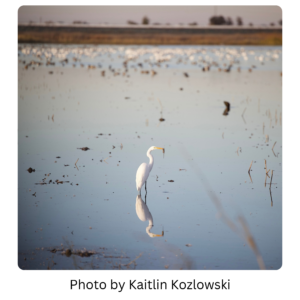 |
Birding and Wildlife Viewing in the Yolo Bypass Wildlife Area 8am-11am |
Meet the California Department of Fish and Wildlife’s manager of the wildlife area who will talk about the history and function of the bypass. Birding and wildlife viewing will depend on current conditions in the bypass. An auto tour is available. Bring outdoor clothes and walking shoes and allow 20 minutes to drive from the conference venue. |
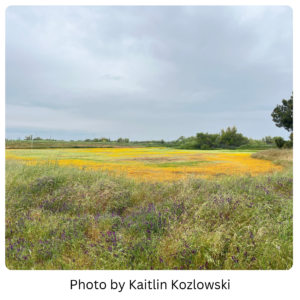 |
Mather Field vernal pools with Dr. Jamie Kneitel 11am-1pm |
Join Dr. Jamie Knietel, California State University Sacramento Department of Environmental Studies Chair, on a guided tour of the vernal pools he studies at Mather Field. Note: Alternate sites may be substituted due to current conditions. Bring outdoor clothes and walking shoes and allow 20 minutes to drive from the conference venue. |
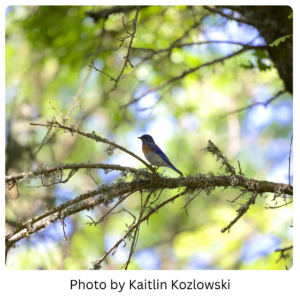 |
Birding and BioBlitz at the Sacramento Valley Conservancy’s Camp Pollock 9am-12pm |
Join the Sacramento Valley Conservancy at their Camp Pollock property along the American River for a fun morning of birding, conducting a bioblitz, and a potential visit to Urrutia Pond, a Sacramento Area Flood Control Agency/U.S. Army Corp of Engineers mitigation site. In the event that flows are elevated in the American River and Camp Pollock is inaccessible, the group may instead visit one of the Sacramento Valley Conservancy’s other properties, such as their 1,000-acre Sacramento Prairie Vernal Pool Preserve complex. Bring binoculars, warm layers, sturdy closed-toe shoes or boots, rain jacket and allow 15 minutes to drive from the conference venue. Backup location near Jackson highway if rain requires. |
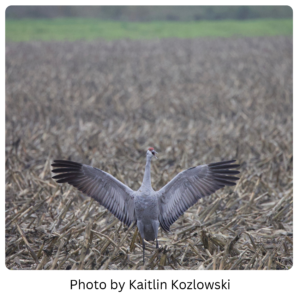 |
Protecting Habitat for Migratory Wildlife at the Cosumnes River Preserve 9am-12pm |
The Cosumnes River Preserve protects a variety of riparian and upland habitats along the Cosumnes River–one of the last un-dammed rivers in the state–and provides habitat for over 250 species of birds, over 40 species of fish, and over 230 species of plants. Join the Preserve’s staff wildlife biologist for a driving tour and discussion of the Preserve’s work to conserve, manage, and protect habitats for migratory wildlife, including wintering sandhill cranes (Antigone canadensis). Attendees will also have the option to explore the Preserve’s over 4 miles of walking trails on their own afterwards. Bring binoculars, warm layers, sturdy closed-toe shoes or boots, rain jacket and allow 35 minutes to drive from the conference venue. We will rent vans and meet up to drive together to the site. |
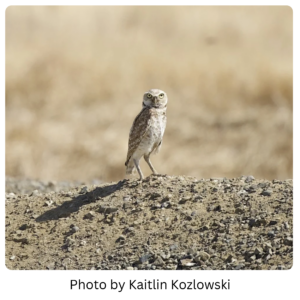 |
Wintering Burrowing Owls of Yolo County 8-11am |
Yolo County once hosted an abundance of both resident and migrant western burrowing owl (Athene cunicularia hypugaea). The area has experienced significant declines in resident burrowing owls over the last 15 years and today very few breeding individuals remain. Interestingly, migratory owls continue to overwinter in the area with some sites attracting an increasing number of individuals. Join the City of Davis Ecological Resources Program Manager, John McNerney, CWB® on a tour of known burrowing owl wintering sites in SE Yolo County. While we can’t promise burrowing owls will be present or visible, it will be a great time out discussing burrowing owls, their habitat, and efforts to conserve them. ring binoculars, warm layers, sturdy closed-toe shoes or boots, rain jacket and allow 20 minutes to drive from the conference venue. |
 |
Branchiopod Survey at Burke Ranch Mitigation Bank 9:15am-2:30pm |
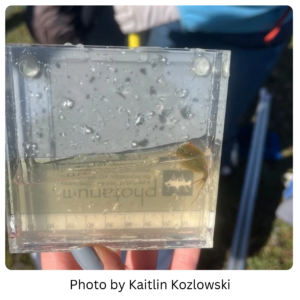
Join us for a vernal pool branchiopod-focused field survey at Burke Ranch Conservation Bank, located in the heart of one of the world’s most spectacular vernal pool landscapes—Jepson Prairie! Docents will demonstrate branchiopod survey techniques, and participants will have the opportunity to observe three federally listed vernal pool species: vernal pool fairy shrimp, Conservancy fairy shrimp, and vernal pool tadpole shrimp. We’ll explore the site’s extraordinary vernal pool landscape, including countless seasonal pools and several massive playa pools that also provide important breeding habitat for California tiger salamanders. Along the way, we’ll discuss branchiopod ecology, habitat, life history, survey methods, regulatory considerations, and the history of the Burke Ranch Conservation Bank and surrounding Jepson Prairie landscape. Come explore one of California’s most unique and important vernal pool ecosystems—and get an up-close look at some of its most specialized inhabitants! Muck boots HIGHLY recommended, rain gear in case of precipitation, sun protection, water, and snacks. Allow 45 minutes to drive from the conference venue. We will gather at a nearby parking lot and condense into fewer cars to access the site. |
 |
Burrowing Owl Artificial Burrow Maintenance and Wildlife Viewing at Stone Lakes National Wildlife Refuge 9am-1pm |
The Stone Lakes National Wildlife Refuge is an urban refuge located just 10 miles south of downtown Sacramento. Join U.S. Fish and Wildlife Service refuge biologists for a day of western burrowing owl artificial burrow maintenance (weed whacking, weeding, cleaning out burrows, installing perches/cameras, and potentially digging up/rehabbing structures), and birding/wildlife watching. In the event of inclement weather and wet ground conditions, the group will instead go on a nature walk at the Refuge headquarters followed by avian nest box installation or planting native plants. Binoculars, warm layers and clothes that can get dirty, sturdy closed-toe shoes or boots (mud boots recommended), work gloves, rain jacket. Allow 25 minutes to drive from the conference venue. |
 |
Antioch Dunes National Wildlife Refuge 9am-4pm |
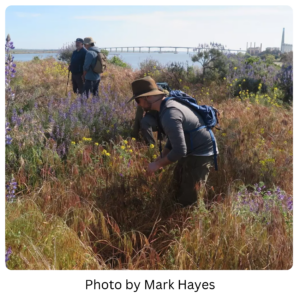
Walking tour and discussion of Antioch Dunes National Wildlife Refuge including recovery efforts related to three endangered species at Antioch Dunes (Lange’s metalmark butterfly, Antioch Dunes evening-primrose, and Contra Costa wallflower). The refuge was created to protect these three endangered species and is an example of a small refuge in an urban landscape. This field trip may be of interest to those interested in endangered species conservation or learning more about how the U.S. Fish and Wildlife Service works toward recovery of endangered species. Be prepared to walk for about two hours. Weather permitting, we will eat lunch on the beach on the south bank of the San Joaquin River. Bring sturdy hiking or walking shoes, binoculars, long pants, rain jacket. Allow 1.25 hours to drive from the conference venue. |
 |
California State Railroad Museum 10am-5pm (self-directed) |
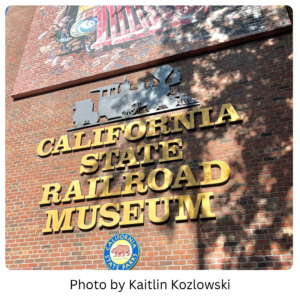
Join us for a guided tour followed by self-guided exploration of the California State Railroad Museum. Afterwards, grab a bite to eat, shop, or otherwise explore the historic district of Old Sacramento and the adjacent Sacramento River. The Museum is open from 10am-5pm, so attendees are welcome to stay for as long or short as they would like. Bring money for parking and allow 15 minutes to drive from the conference venue. |
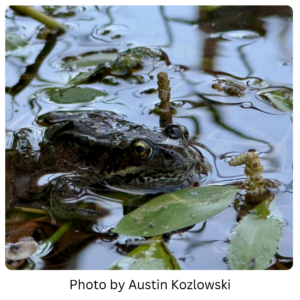 |
California Red-legged Frog Egg Mass Survey at Big Gun Conservation Bank 9am-2:45pm |
Join us for a California red-legged frog egg mass-focused field survey at Big Gun Conservation Bank, home to the largest documented population of California red-legged frogs in the Sierra Nevada! Docents will demonstrate egg mass survey techniques, and participants will have the opportunity to observe California red-legged frog egg masses in the field while learning how biologists monitor this iconic and federally listed species. We’ll explore the conservation bank’s wetlands and breeding habitats while discussing California red-legged frog ecology, habitat, life history, survey methods, regulatory considerations, and the history of the Big Gun Conservation Bank. Come experience one of the Sierra Nevada’s most important California red-legged frog habitats and get an up-close look at these fascinating amphibians and the conservation efforts helping protect them! Note: This field trip will be weather dependent. Muck boots HIGHLY recommended, rain gear in case of precipitation, sun protection, water, and snacks. Allow 1.25 hours to drive from the conference venue. We will gather at a nearby parking lot and condense into fewer cars to access the site. |
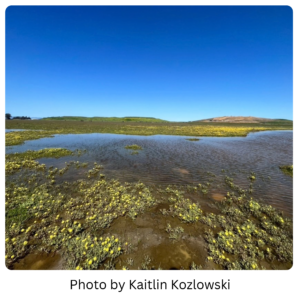 |
Vernal Pool Restoration Insights at Markham Ravine Mitigation Site 9:15am-2:30pm |
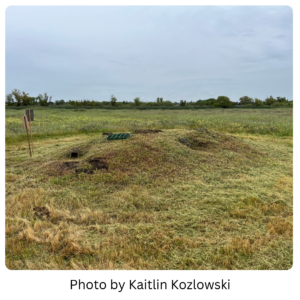
Join us for an inside look at vernal pool restoration at the Markham Ravine Mitigation Site in Placer County! The site features a network of restored wetland habitats connected by swales and interspersed with annual grasslands, creating wetland complexes that resemble the landscapes that historically occurred throughout the region. These habitats were reestablished through the restoration of former irrigated pasture. Participants will have the opportunity to explore these unique restored vernal pools while learning how restoration can recreate and reconnect seasonal wetland habitats. Docents will discuss site history, vernal pool ecology, restoration techniques, habitat management, and regulatory considerations, providing insight into both the challenges and opportunities involved in restoring these distinctive California ecosystems. Come see vernal pool restoration in action and learn how these unique habitats can be brought back to the landscape! Muck boots HIGHLY recommended, rain gear in case of precipitation, sun protection, water, and snacks. Allow 45 minutes to drive from the conference venue. We will gather at a nearby parking lot and condense into fewer cars to access the site. |